CAPACITY NARRATIVE
Organizational capacity and operational presence
ADRA Lebanon is a registered humanitarian and development organization established in 2014 under the Lebanese Ministry of Interior. It works across Lebanon’s most vulnerable communities through programs in Emergency Response, Food Security and Nutrition, WASH, Education, Livelihoods, Health, and Gender Empowerment. ADRA Lebanon combines immediate humanitarian relief with longer-term recovery and resilience-building, with programming grounded in dignity, inclusion, accountability, and conflict sensitivity.
In 2025, ADRA Lebanon reached 27,742 people across its interventions, responding to emergency and recovery needs through food security, winterization, education, WASH, health/medication support, livelihoods, women’s empowerment, and psychosocial support. Its work covered Beirut and Mount Lebanon, Bekaa, Baalbek-Hermel, and other areas where vulnerable communities faced the combined impact of conflict, displacement, economic pressure, and strained essential services. Key results included 17,130 people reached with food security assistance, 4,100 people supported with winterization assistance, 1,380 people reached through education support, 251+ people receiving chronic medication support, 620 hygiene kits distributed, and 200+ women completing vocational skills training.
ADRA Lebanon operates through a structured country team with more than 35 staff, including project managers, field officers, MEAL specialists, social workers, finance and administration staff, logistics and procurement, safeguarding, security, and program coordination functions.
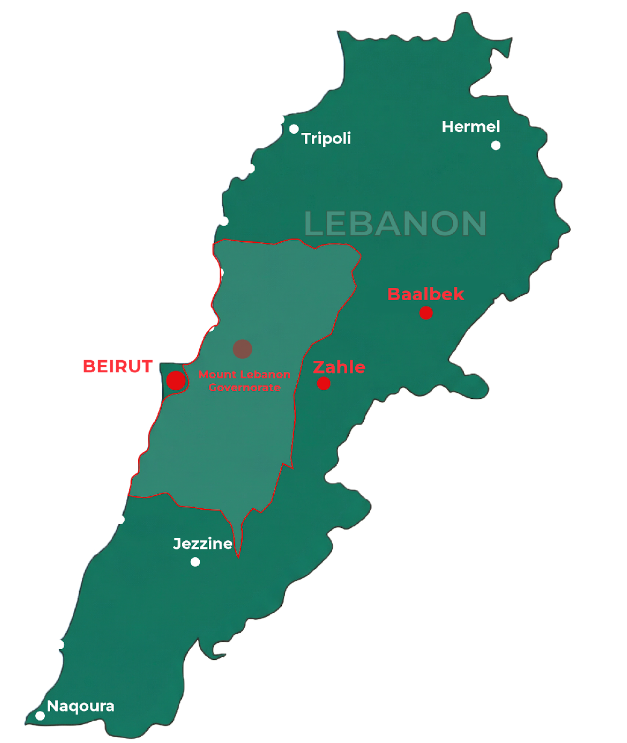
Its offices and field presence in Beirut/Mount Lebanon, Bekaa, and Baalbek support coordination, community engagement, assessments, distributions, monitoring, and referral pathways. This structure allows ADRA Lebanon to maintain close proximity to affected communities while also ensuring centralized oversight, compliance, finance, procurement, MEAL, and donor reporting capacity.
2025 capacity snapshot
| 27,742 people reached across interventions | 17,130 people reached with food security assistance | 4,100 people supported with winterization assistance |
| 1,380 people reached through education support | 251+ chronic patients received medication support | 200+ women completed vocational skills trainings |
Additional 2025 outputs included 2,500 food parcels distributed, 10 schools supported with heating fuel, 166 diesel stoves distributed, 460 children/students reached with MHPSS sessions, 620 hygiene kits distributed, more than 20 women launching or expanding home-based businesses, and one community exhibition displaying women’s products.
| Area | What 2025 demonstrated |
|---|---|
| Emergency food assistance | Rapid transition from crisis assessment to e-cards, food parcels, raw material support for kitchens, PDM, feedback, and PSS integration. |
| Winterization/basic assistance | Household and school-based assistance in Bekaa and Baalbek-Hermel, including fuel, stoves, and school heating. |
| Education and protection | Retention support, ECE/RSP/BLN pathways, transportation, snacks, stationery, PSS, and referrals. |
| Livelihoods and women empowerment | Vocational skills, entrepreneurship, business coaching, literacy/numeracy, dignity support, and home-based business pathways. |
| Health/medication | Small but relevant medication support through partners for chronic patients and highly vulnerable households. |
| WASH and school infrastructure | REWASH launched in 2025 to rehabilitate learning spaces, improve WASH facilities, and install solar energy systems. |
Sectoral and geographic capacity
| Beirut / Mount Lebanon | Baalbek | Bekaa / Baalbek-Hermel |
|---|---|---|
| Administration, coordination, food security and e-card implementation, health referrals, partner coordination, emergency response. | Education, retention support, children’s learning pathways, women empowerment, livelihoods, community-based activities. | Winterization, basic assistance, WASH, school support, food security, and education-through-WASH interventions. |
Financial capacity highlight
Over the last three years, ADRA Lebanon has managed a documented portfolio of more than USD 8 million, including USD 4.77 million in 2023, USD 1.70 million in 2024, and USD 1.55 million in 2025. This reflects experience managing multiple donors, budgets, sectors, reporting requirements, procurement processes, partner coordination, and compliance systems across both humanitarian and development programming.
Emergency response capacity
Since the escalation of the war, ADRA Lebanon has activated its National Emergency Management Plan and Emergency Response Team structure. The team has carried out rapid needs assessments, coordinated with national and local authorities, and implemented emergency interventions in shelters and host communities.
ADRA Lebanon’s Emergency Response Team continues to operate despite challenging security conditions, supported by staff, trained church volunteers, and deployments from ADRA International’s Emergency Management Unit. The emergency structure includes the Emergency Response Coordinator, Regional Emergency Coordinator, planning/design support, MEAL, program coordination, finance, logistics/procurement, safety and security, safeguarding, communications, and field distribution capacity. Additional ADRA Network emergency professionals can be deployed as needed while the emergency situation continues.
Roles and Workflow
| Function | Role in proposal / implementation |
|---|---|
| Strategic oversight | Country Director and Board / senior leadership. |
| Emergency leadership | Emergency Response Coordinator, Regional Emergency Coordinator, ERT and ADRA Network support. |
| Program design | Planning/design focal point, Program Coordinator, and technical project managers. |
| Implementation | Project managers, field officers, daily workers, volunteers, and local partners. |
| Quality and support | MEAL/AAP, safeguarding, finance, HR, procurement/logistics, security, and communications. |
Main point of contact
For proposal development and partner coordination, the planning/design focal point may serve as the main day-to-day contact. The Program Coordinator should be copied for portfolio-level alignment and continuity. Depending on the opportunity, the Emergency Response Coordinator, relevant Project Manager, MEAL/AAP, Finance, Logistics/Procurement, Safeguarding, Security, and Communications should be included at the right stages.
Completed / activated emergency responses
ADRA Lebanon’s first phase of emergency response focused on immediate, life-sustaining support for displaced families in shelters and host communities. Following the activation of the National Emergency Management Plan and Emergency Response Team structure in March 2026, ADRA Lebanon mobilized an initial USD 20,000 emergency response, reaching 432 families, approximately 1,944 people, with hygiene kits, dignity kits, and water containers distributed in shelters.
In parallel, ADRA Lebanon worked with Tahaddi to address urgent bedding and shelter-related gaps. Through this partnership, 160 individuals were initially supported with mattresses, blankets, and pillows, with support continuing for more than 200 additional people through additional bedding assistance. This partnership helped extend ADRA’s reach and respond to immediate shelter needs that were identified during the emergency response.
ADRA Lebanon also implemented the SDA EMU Church response, with a budget of USD 22,000, reaching 438 displaced people through food and hygiene e-vouchers. This response was supported by trained volunteers and community outreach, allowing families to access essential food and hygiene items with greater flexibility and dignity.
Together, these initial emergency actions reached approximately 2,542 people directly, with additional bedding support continuing. The response demonstrates ADRA Lebanon’s ability to move quickly from assessment to implementation, combine direct delivery with partner-supported assistance, and adapt response modalities based on the needs of displaced households.
Completed Emergency Response projects
| Response | Timeline | Budget | Beneficiaries / reach | Key outputs |
|---|---|---|---|---|
| Initial NEMP response | Mar 2026 | USD 20,000 | 432 families / approx. 1,944 people | 432 hygiene kits, dignity kits, and water containers distributed in shelters. |
| Tahaddi bedding and shelter support | 2026 | Partner-supported items / emergency response support | 160 + 200+ additional individuals planned/continuing | Mattresses, blankets, and pillows distributed with Tahaddi; continued additional bedding support. |
| SDA EMU Church response | 2026 | USD 22,000 | 438 displaced people | Food and hygiene e-vouchers with volunteer-supported outreach and distributions. |
ADRA Lebanon is currently scaling up food security response through two larger emergency projects. The CFGB/ADRA Canada BRIDGE project, approved to begin on 1 May 2026, will reach approximately 1,090 households, or 4,905 individuals, through three monthly food e-voucher distributions for highly vulnerable displaced people living outside IDP centers.
ADRA Lebanon is also launching a Polish Aid-funded response with ADRA Poland, targeting 1,565 IDPs with food e-vouchers.
| Project | Timeline | Budget | Donor / partner | Beneficiaries | Key design |
|---|---|---|---|---|---|
| BRIDGE – CFGB / ADRA Canada | May-Sep 2026 | CAD 647,076 | CFGB + ADRA Network (ADRA Australia) / ADRA Canada | 1,094 households / 4,925 people | Three monthly food e-voucher transfers; total voucher value USD 369,375 / CAD 502,350. |
| Polish Aid / ADRA Poland | Jul-Nov 2026 | Approx. USD 230,000 / PLN 836,363 | Polish Aid through ADRA Poland | 1,565 IDPs | Restricted food e-cards in Beirut and Mount Lebanon with verification, monitoring, market checks, and complaints channels. |
| Opportunity | Timeline | Budget | Donor / partner | Beneficiaries | Focus |
|---|---|---|---|---|---|
| MEND III – emergency medication support | 2026 expected | EUR 20,000 | ADRA France + Protestant Foundation pending | Target to be finalized | Medication support for IDPs and highly vulnerable people. |
| Slovak Aid emergency food assistance – Bekaa | 2026 proposal / submitted, pending approval | USD 100,000 | Slovak Aid through ADRA Slovakia | 600 hh / 3200 individuals | Emergency food assistance opportunity in Bekaa. |
Sectoral expertise and implementation experience
ADRA Lebanon’s strongest recent emergency expertise is in food security and voucher-based assistance. Since 2020, ADRA Lebanon has implemented seven food security projects, reaching more than 4,000 direct participants and impacting more than 20,000 people. Three of these projects were funded by CFGB, building a strong operational model for e-card delivery, accountability, monitoring, vendor management, and dignified food access.ADRA Lebanon has a well-established e-card system through Le Charcutier, including beneficiary orientation, SMS notifications, electronic loading of monthly transfers, balance monitoring, electronic receipts, paper receipt collection, follow-up calls, price monitoring, spot checks, and restrictions on non-food or harmful items. This system allows families to purchase fresh, culturally appropriate food while enabling ADRA to monitor use, identify concerns, and support healthier food choices.
STRONGEST EMERGENCY IMPLEMENTATION AREA
Food security and e-card implementation
1. Targeting
Needs-based criteria, MoSA/partner referrals, phone and in-person verification, reserve lists, follow-up.
2. Distribution
Orientation at distribution, SMS notification of transfers, accessible points, shopping support when needed.
3. Monitoring
Electronic and paper receipts, balance and price monitoring, PDM, focus groups, hotline and complaints channels.
Other Sectors and Expertise
ADRA Lebanon also has demonstrated expertise in WASH, winterization/basic assistance, education, livelihoods, women’s empowerment, and health assistance. Previous and ongoing projects include school-based education and retention support, early childhood education, basic literacy and numeracy, psychosocial support, vocational training, business coaching, financial literacy, women’s empowerment activities, WASH facility rehabilitation, solar-powered water systems, hygiene and dignity kit distributions, winter fuel assistance, and medication support. In 2024, ADRA Lebanon reached 13,500 individuals through emergency response, supported more than 3,000 households through food security and nutrition interventions, supported over 460 children through education and child protection activities, trained 180 women in livelihood skills, and supported clean water access for over 15,000 people through WASH interventions.
ADRA Lebanon’s 2025 portfolio further demonstrates this multi-sectoral capacity. LIFE, funded by CFGB through ADRA Canada, reached 6,678 people with food assistance, delivered e-cards to 3,853 individuals, distributed 1,000 food parcels, and improved Food Consumption Score results from approximately 41 percent at baseline to approximately 98 percent at endline. GROW, supported by ADRA Australia, is a 48-month initiative designed to strengthen youth resilience and employability through retention support, psychosocial support, languages, digital literacy, AI awareness, and vocational training, while also building the capacity of ADRA teams and local educators/volunteers.
Current non-emergency projects and 2025 references
Current Non Emergency Projects
| Project | Status | Timeline | Sector / modality | Budget | Donor / partner | Beneficiaries | Key outputs / notes |
|---|---|---|---|---|---|---|---|
| THRIVE | Current | Dec 2025-Dec 2026 | Elderly food security + wellness | Approx. USD 130,000 | LDSC / ADRA Australia / ADRA France | 1,100 beneficiaries | Food e-cards, shopping support, wellness and community engagement. |
| GROW | Current | Jan 2025-Jan 2029 | Education, resilience, livelihoods | Approx. AUD 250,000/year | ADRA Australia | Targets per project design | Retention support, PSS, languages, digital literacy, AI awareness, vocational pathways. |
| REWASH | Current | Oct 2025-Dec 2026 | Education + WASH infrastructure | Approx. USD 230,000 | Slovak Aid / ADRA Slovakia | 4,054 students + 1,000 children reached with hygiene promotion | 12 schools; rehabilitation, WASH upgrades, solar panels in 6 schools. |
Completed / recent references showing implementation capacity
| Project | Status | Timeline | Sector / modality | Budget | Donor / partner | Beneficiaries | Key outputs / notes |
|---|---|---|---|---|---|---|---|
| LIFE 2025 | Completed reference | Jan-Oct 2025 | Food security | USD 574,265 | CFGB through ADRA Canada | 1,511 HH / 6,678 people | E-cards to 3,853 individuals; 1,000 food parcels; FCS improved from approx. 41% to approx. 98%. |
| CARE | Completed reference | Oct 2024-Feb 2025 | Emergency food assistance | USD 352,245 | 18 ADRA Network offices + LDSC | 10,452 displaced people | E-cards, food parcels, raw materials for kitchens; PDM and PSS integrated. |
| WARM VII | Completed reference | Dec 2024-Apr 2025 | Winterization / basic assistance | USD 300,000 | LDSC | 435 households + 10 schools / 4,000 students | Fuel support, heating fuel for schools, 166 diesel stoves, 155 food parcels. |
| EMBRACE | Completed | Oct 2023-Dec 2025 | Livelihoods and women empowerment | USD 530,518 | ADH through ADRA Germany | 200+ women and girls | Vocational skills, business coaching, BLN, PSS and dignity support. |
| STAND III | Completed | Aug 2024 -Dec 2025 | Education/ Protection | USD 513,221 | ADRA Australia, EO Metterdaad/ ADRA Netherlands, LDSC | 460 students + their caregivers | Retention Support, Basic Literacy and Numeracy, Early Childhood Education, snacks, stationery, and transportation support. |
Local partners and coordination capacity
ADRA Lebanon coordinates its emergency response with the Ministry of Social Affairs, the Disaster Risk Management Unit, and relevant humanitarian coordination platforms, including the Food Security and Agriculture Sector and WASH sector. In the current emergency response, ADRA Lebanon is also coordinating with Tahaddi, Armenian Relief Cross Lebanon, Adventist School Mousaitbeh, the Seventh-day Adventist Church in Lebanon, Adventist Community Center, Adventist Learning Center, and church volunteer networks.
ADRA Lebanon has a strong network of local and national partners, including ABAAD, Himaya, Nabad, Caritas, Wing Woman Lebanon, Armenian Relief Cross Lebanon, Loubnaniyoun, Middle East University, and others. These relationships support protection referrals, psychosocial support, health assistance, education, community outreach, emergency distributions, and access to vulnerable communities.
Tahaddi – Community-based organization operating in vulnerable informal settlement and refugee contexts, with experience in education, food assistance, psychosocial support, and medical/health center services. ADRA has worked with Tahaddi during the latest emergency, including support for bedding items and coordinated distributions.
Armenian Relief Cross Lebanon (ARCL) – Local relief and community-based organization supporting identification, referrals, and assistance to vulnerable households mainly in health, basic assistance and food security, including during emergency response. ARCL implemented two medication provision projects as a sub-implementing partner with ADRA in 2025.
Loubnaniyoun – Local organization working in health and other community support projects. ADRA has collaborated with Loubnaniyoun as an implementing/referral partner, including in medication distibution project.
ABAAD and Himaya – Specialized protection partners with expertise in gender, GBV, child protection, and psychosocial support. ADRA uses these partnerships for referral pathways and specialized support when protection concerns require services beyond ADRA’s direct scope
Nabad and other PSS/community partners – ADRA has partnered with local organizations providing psychosocial assistance as a cross-cutting component across education, livelihoods, food security, and protection-sensitive programming.
Ministries and sector platforms – ADRA coordinates with the Ministry of Education, Ministry of Health, Ministry of Social Affairs, municipalities, DRM structures, and sector working groups as relevant to each intervention.
| Partner | Where they operate | Sectoral expertise | Previous / potential collaboration |
|---|---|---|---|
| Tahaddi | Vulnerable refugee/informal settlement contexts; community-based presence. | Education, food assistance, psychosocial support, and medical/health center services. | Emergency bedding support and coordinated distributions; community access and service complementarity. |
| Armenian Relief Cross Lebanon (ARCL) | Beirut and Lebanese Armenian community networks. | Health and medication provision. | Sub-implementing partner twice for medication distribution; expected partner for THRIVE community center access, mainly with Lebanese Armenians. |
| Loubnaniyoun | Lebanon, community and health-related programming. | Health and community support. | Sub-implementing partner for medication distribution; partner link for school/WASH implementation. |
| ABAAD, Himaya, Nabad | Project areas as needed; specialized protection and PSS actors. | Protection, GBV, child protection, psychosocial support. | Provided psychosocial assistance to around 400 students in education work in Baalbek and to women’s empowerment participants; referral pathways for specialized support. |
| Adventist School Mousaitbeh, ACC, ALC, SDA Church | Beirut/Mount Lebanon and church/community networks. | Community outreach, volunteers, distribution support, local access. | Distribution hub and volunteer mobilization during emergency response. |
Quality, accountability, protection, and MEAL
ADRA Lebanon applies Sphere Standards, Core Humanitarian Standards, safeguarding, Accountability to Affected Populations, gender and disability inclusion, psychosocial support, and environmental awareness across its programming. In emergency food assistance, ADRA Lebanon uses needs-based targeting, sex- and age-disaggregated data, household verification, post-distribution monitoring, focus group discussions, hotline feedback, help desks, home visits where needed, and referral pathways.
ADRA Lebanon’s accountability system includes multiple feedback channels such as hotline, community meetings, suggestion boxes, help desks at distribution sites, and home visits for people with mobility challenges. Sensitive complaints, including SEA, GBV, and protection concerns, are handled confidentially by trained staff. The team also communicates clearly with beneficiaries about selection criteria, rights and entitlements, e-card value, permitted purchases, and complaint mechanisms.
| System area | How it works |
|---|---|
| Targeting and verification | Vulnerability criteria; MoSA/partner referrals; phone and in-person verification; reserve lists; duplication checks. |
| Information and entitlement sharing | Beneficiary orientation, information sheets, card value and permitted-item explanations, rights and entitlements communication. |
| Feedback and complaints | Hotline, help desks, community meetings, household visits, PDM, focus group discussions and confidential sensitive complaint handling. |
| Protection-sensitive design | Gender-balanced teams, accessible distribution points, safety audits, PSEA/safeguarding, referrals for GBV/child protection/MHPSS. |
| Monitoring and learning | Electronic receipts, paper receipt checks, balance reports, market/price checks, spot checks, PDM, and adaptive follow-up. |
Country-level trust and funding rekationships
Existing donor and network relationships
ADRA Lebanon has successfully implemented projects with a broad donor base, including LDS Charities, ADH, CFGB, EO Metterdaad, Protestant Foundation, SlovakAid, ADRA Australia, ADRA Canada, ADRA Germany, ADRA France, ADRA Netherlands, ADRA Korea, ADRA Poland, ADRA Slovakia, and other ADRA Network offices. ADRA Lebanon has also built positive collaboration with country government grants, including Czech Republic support after previous successful implementation, and is currently implementing a Czech Embassy-supported water supply project in Bekaa. Slovak donor-supported programming is also ongoing or under development, including education through WASH facility rehabilitation, school rehabilitation/solarization, hygiene and dignity kit distribution, and awareness activities.
Government grants and embassy engagement
ADRA Lebanon’s current and recent portfolio includes European government-linked grants and embassy engagement. This section is framed as factual experience with official donors, compliance expectations, and country-level relationships, not as a marketing section.
| Country / donor channel | Project or engagement | Status / note |
|---|---|---|
| Slovakia / Slovak Aid through ADRA Slovakia | REWASH: school rehabilitation, WASH upgrades, solarization, hygiene training, and hygiene kits. | Current project: Oct 2025-Dec 2026; budget approx. USD 230,000; 12 schools; 4,054 students and 1,000 children through hygiene promotion. |
| Czech Republic / Embassy of Czech Republic in Lebanon | Small water supply project in Bekaa, following years of successful implementation, including MOSH-related work in Bekaa. | Current/recent embassy-supported project; approximate value USD 24,000. |
| Poland / Polish Aid through ADRA Poland | LIFE of Solidarity in Crisis: restricted food e-cards for vulnerable IDPs in Beirut and Mount Lebanon. | Planned Jul-Nov 2026; requested grant amount PLN 836,363 / approx. USD 230,000; target 1,565 people. |
| France / ADRA France and Protestant Foundation | MEND medication support and MEND III opportunity for IDPs; recent visit to the French Embassy. | MEND I/II completed in 2025; MEND III expected/under development; EUR 20,000 partially identified with Protestant Foundation approval pending. |
| Australia / Australian Embassy relationship | Courtesy engagement with Australian Embassy during Wing Woman Lebanon project success event. | Former Ambassador has moved; ADRA Lebanon has not yet met the new Ambassador and is planning a courtesy visit when DFAT local post contact is confirmed. |
Operational and Technical Complenebtarity
ADRA Lebanon may act as lead organization where its role is programmatically appropriate, especially for food security, emergency assistance, WASH/basic assistance, education/livelihood activities, and partner-managed referral or specialized components.
| Area | Current gap / note | How it can be managed |
|---|---|---|
| Reach and scale | Current needs exceed ADRA Lebanon’s direct reach, especially for out-of-shelter displaced households and areas where partner access is needed. | Use consortium or partnership structure to expand geographic/community reach and reduce duplication. |
| Consortium experience | ADRA Lebanon is ready to work in a larger structure and may lead where appropriate, but the final consortium model should be built carefully around confirmed roles and practical implementation capacity. | Define lead/co-lead roles, decision-making, referral pathways, budget lines, reporting responsibilities, and partner due diligence. |
| Team workload | The team is currently overloaded due to emergency response, ongoing projects, assessments, proposal development, and coordination demands. | Activate additional ERT/surge support as needed; prioritize grant writing, MEAL, communications, operations, and field coordination support. |
| Competitive funding environment | Most opportunities are likely highly competitive, with many organizations pursuing emergency and recovery funding. | Submit a focused, evidence-based design showing ADRA’s current response, e-card capacity, local partnerships, and honest gaps. |
| Readiness for a larger response | ADRA Lebanon is ready to pursue a bigger opportunity, provided the design matches realistic staffing, partner commitments, and donor requirements. | Use this capacity statement as a base for partner discussions, consortium clarification, and proposal narrative development. |
Closing position
ADRA Lebanon is operational, connected to communities, and ready to coordinate with ADRA Country offices and partners in a way that is realistic, accountable, and responsive to the current emergency and recovery context.